From Waste to Yarn – Professional manufacturer of cutting, opening & carding machines for textile recycling lines.



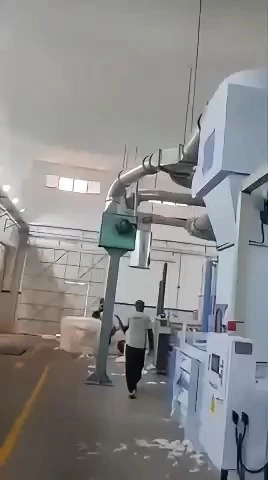
Rigid textile waste recycling machine 250-300kg
Hard waste recycling machine
Automatically processes denim, waste yarn, knits, and other textile waste through a full "cutting → metal/spark detection → dust removal → conditioning → opening → baling" workflow, converting discarded textiles into high-quality spinnable fibers.
Product Description
Hard Waste Recycling Machine Line: Purpose-built to process tough textile refuse—such as knitted scraps, yarn waste, denim trimmings, nonwoven offcuts, and post-consumer garments—this system utilizes a seamless process flow of "Shearing → Spark & Tramp Metal Sensing → Negative Pressure Dust Extraction → Moisture Conditioning → Fiber Defibration → Press Baling" to transform diverse textile byproducts into premium, spinnable regenerated fibers. These recovered fibers are directly fed back into spinning or nonwoven manufacturing systems, fostering a closed-loop, zero-waste production ecosystem. Far beyond a basic compliance solution, this equipment serves as an invaluable asset, enabling textile producers to establish eco-friendly supply chains, reinforce ESG qualifications, and gain a competitive edge in international markets.
Product Advantages
Superior Fiber Opening — The Foundation of High Quality
Effective fiber disintegration goes beyond initial processing; it defines the maximum potential quality of your end product. Engineered to shred dense, solid scrap—including denim, knits, and nonwovens—our machinery produces consistent, loose fiber tufts ready for subsequent steps. Simultaneously, it blends materials and extracts contaminants during the same cycle, streamlining multi-step operations into a unified workflow. The processing unit features a precision feed mechanism paired with a main cylinder that supports versatile attachments: pin rollers, card wire clothing, or pinned beaters. This adjustable layout ensures you apply the ideal configuration for every specific material.
Operational Safety & Hazard Prevention
Textile scrap is inherently unpredictable, often harboring hidden fasteners, buttons, and metallic fragments. Within a high-speed fiber processing line, even stray hardware can severely damage wire clothing or gouge main rollers. Furthermore, frictional sparks risk igniting dust inside exhaust ducts, creating hazardous working conditions.
To mitigate these risks, our high-precision Metal & Spark Detection and Rejection System is installed at every key ducting channel. Utilizing dual-channel phase analysis and high-frequency detection, it identifies ferrous components (down to Φ2mm) as well as non-ferrous metals like copper, aluminum, and stainless steel. Upon detecting a threat or spark, the diverter responds in under 100 milliseconds to purge foreign matter and trigger suppression protocols.
Broad Compatibility Across Diverse Materials
In addition to conventional textile waste—such as cotton thread residue, fabric selvedges, and denim clippings—this versatility allows processing an expanded array of fibrous inputs without requiring machine modifications:
* Bast fibers: flax, hemp, sisal, ramie
* Synthetic materials: polyester, acrylic, viscose, polyamide (nylon)
* Blended fabrics: cotton-polyester, linen-cotton blends
* Specialty fibers: fiberglass, man-made regenerated fibers
A single line handling varied raw feeds while ensuring steady output quality.
Product specification
technical specification
Product Specifications
COMPANY STRENGTH
Product Applications
FAQ
The target market of our brand has been continuously developed over the years. For more information, please reach our team, we are more than happy to help.
Jinan Morinte Machinery